

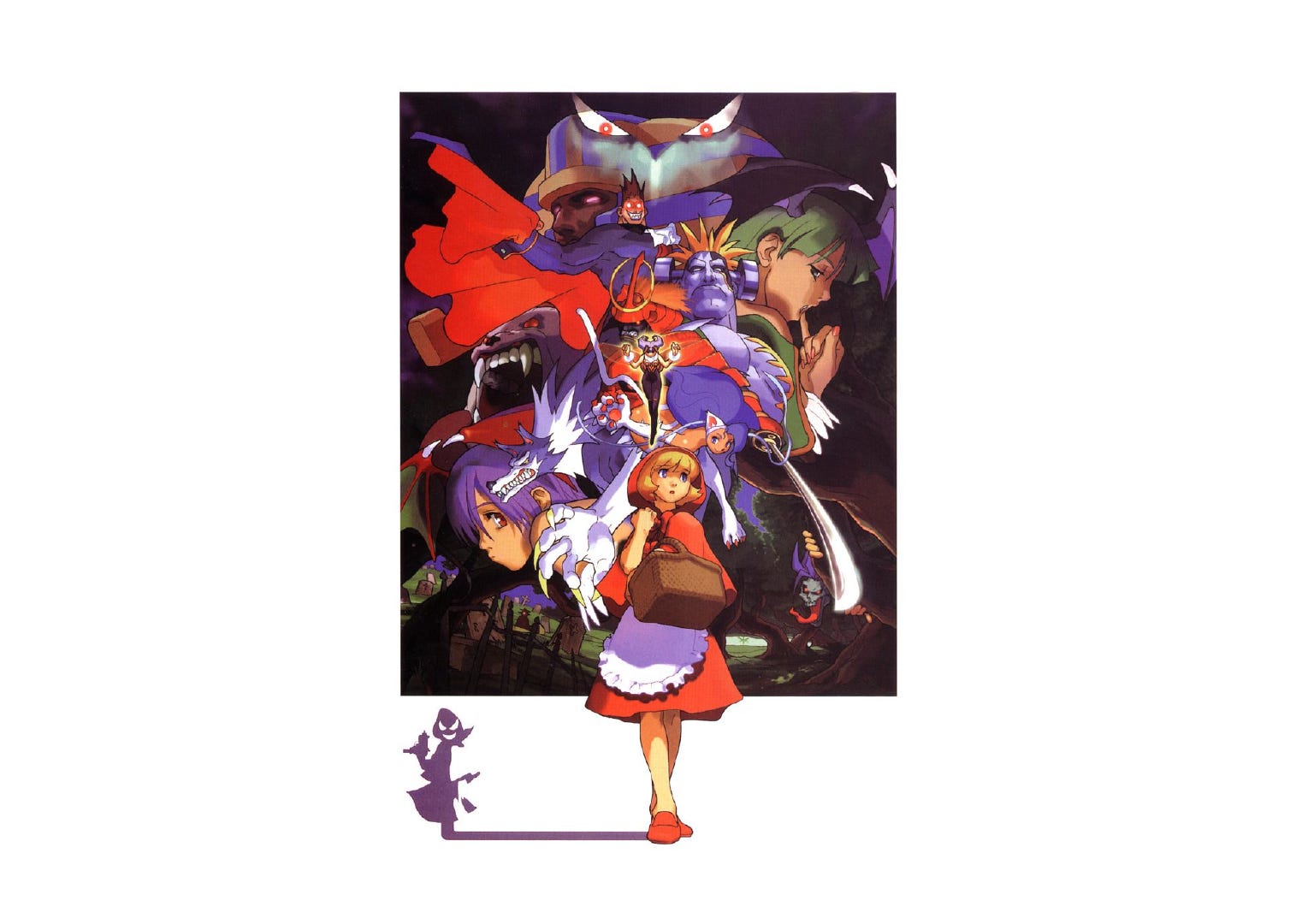
Of all the fighting games I’ve put any significant amount of time into, Vampire Savior is my personal favorite. The Vsav community is amazing, so when I was just starting out, there was no shortage of folks who were happy to answer any questions I had. I later realized that there were things I didn’t even think to ask about (or things that I should’ve asked about sooner). It’s hard to escape the Dunning-Kruger Effect!
This post is aimed at fighting game players coming to Vsav from other games. Fighting game knowledge is very transferable, but while existing fighting game players can pick up a new game much more quickly than someone brand new to the genre, they also bring a lot of baggage and expectations from the other games they’ve played, which can sometimes hinder the learning process in a new game. The following is a non-exhaustive list of things I wish I had known when I was first starting out in Vsav.
A Few Things I Wish I Had Known Sooner
1. (Almost) Everything is Plus on Block
In many modern 2D fighting games, it’s a relatively safe assumption that any given grounded normal is probably at least a bit negative on block. In Guilty Gear Strive, Sol’s c.S is +3 on block, and his f.S is +2 on block. All of his other grounded normals leave you at some kind of frame disadvantage. Street Fighter 6 is similar, where unless you’re using drive rush or mashing jabs, a character will have one or maybe two grounded normals that are plus on block.
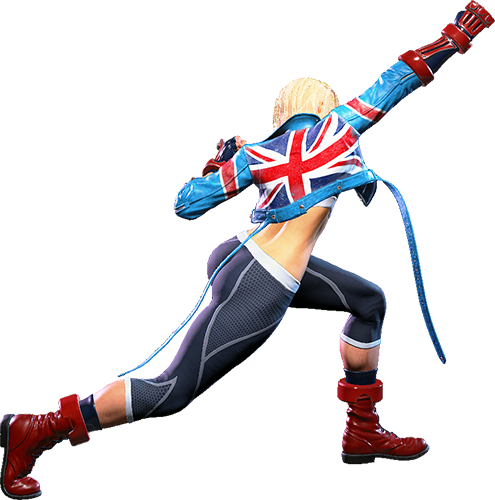
In Strive or SF6, you can assume grounded moves are minus on block and memorize the small handful of exceptions. Vsav, like many older fighting games, is the exact opposite. For example, here’s a list of Felicia’s grounded normals and their frame advantage on block:
Yes, her sweep is +3 on block. How does this not break the game? First, like many older 2D fighting games, pushback is pretty significant, so even with this kind of frame advantage, the attacker may be far enough away that they’re less immediately threatening than you might expect. Second, and more importantly, Vsav gives you strong defensive options while in blockstun, which brings us to point number two.
2. Start Your Pushblock Practice!
One of the core defensive mechanics of Vsav is advancing guard, which people most commonly refer to as pushblock. The name makes intuitive sense—a pushblock is the ability to push the attacker away when you’re blocking their attack. If you’re watching a Vsav tournament, you’ll hear commentators interchangeably use the terms pushblock, advancing guard (which they might shorten to “AG”), and tech hit (the in-game voice says/displays “tech hit” upon successful pushblock).
A pushblock or two will generally get you some breathing room and get you back to neutral—it’s incredibly strong! Remember that chart of Felicia frame data we just looked at a second ago? Pushblock is one of the reasons it’s a lot less scary than it might seem at first glance. It’s also one of the hurdles to clear to become an intermediate player in the game. I call it a hurdle because the input for pushblock is kind of weird, so it’s probably going to take you some time to figure out a method that works for you and get decent at it.
You pushblock by mashing buttons while blocking. Every additional button you press increases the odds that the pushblock happens. If you hit at least six buttons, the pushblock is guaranteed on that sixth button (if you hadn’t already gotten it). You have to press the buttons sequentially (you can’t just press all six attack buttons on the same frame and expect anything to happen).
In my experience, everybody tends to find a technique that works for them, and no two players’ techniques are identical. The method that works best for you will also heavily depend on your input device, but I promise that there are players who are consistently pushblocking on stick, on leverless, and on pad.
Usually, pushblock methods come as some form of a slide input, a piano input, or some combination of the two. There are a ton of resources out there to help you learn how to do this. Generally, you want the first button you press in a pushblock attempt to be a button like LP or LK—that way if it turns out that you aren’t actually blocking anything, you get a pretty quick/noncommittal button.
When you’re just starting out, don’t worry about pushblocking in real matches! The important thing is finding a method you’re comfortable with and practicing it for a few minutes in training mode here and there. It’s easiest to practice against moves that put you in block stun for a long time, like Morrigan’s ES soul fist (236PP). Start working on the muscle memory early and it’ll become second nature in no time. If you’re having trouble finding a method that works for you, ask in the Vsav Discord server—there is an army of people who will help you!
3. Anti-Airing Is Probably Different Than What You’re Used To
In many 2D fighting games, grounded anti-airs are incredibly important. A jump that goes unchallenged leaves the attacker at a massive advantage. The developers generally give all characters grounded anti-airs that can consistently beat jumps. Any given Street Fighter character probably has at least one normal that will cleanly beat any jump-in, as long as you space and time that anti-air move correctly (and many characters will have specials that are even more reliable). You see the same thing in the Guilty Gear series, with characters’ 6P anti-airs having disjointed hitboxes to ensure they can beat aerial attacks.
Similar to the frame advantage stuff earlier, Vsav is the polar opposite of these games. In Vsav, in many situations, many characters will not have any grounded anti-air option that will work. Unsurprisingly, this makes Vsav a much more airborne fighting game than something like the Street Fighter series. That being said, there are plenty of answers to people jumping around; they’re just a lot more varied/nuanced than “stand in the right spot and press my AA button.”
When I’m thinking about how to deal with a jumping opponent in Vsav, the options I’m considering are usually some combination of:
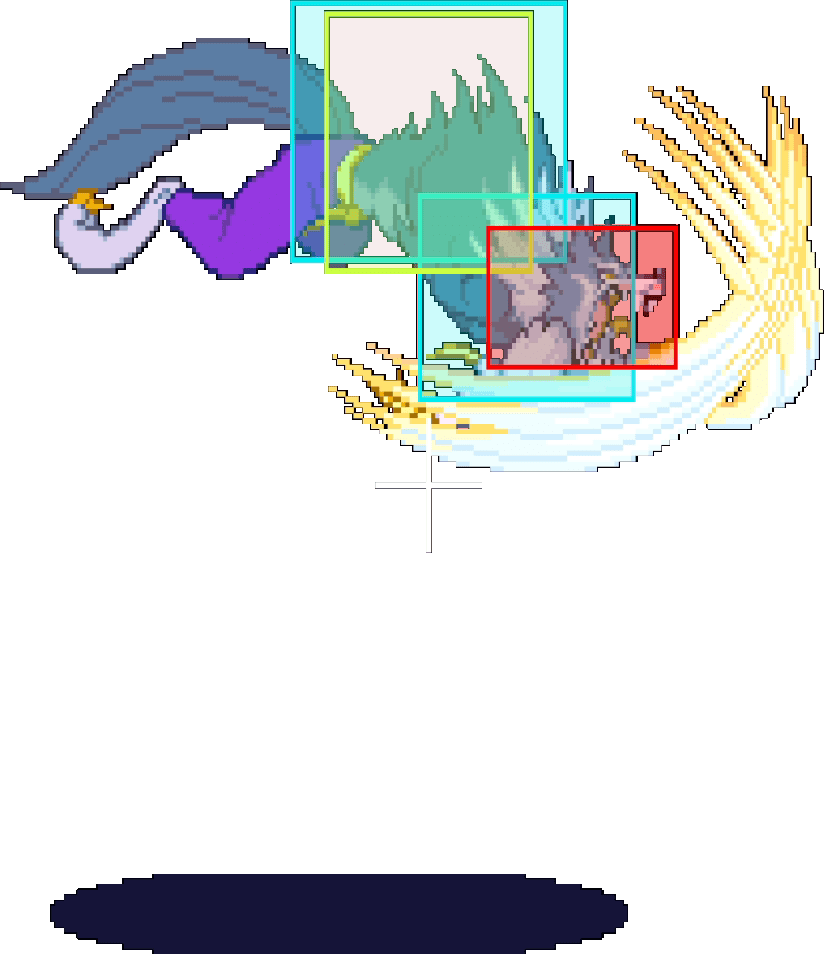
Air-to-air: Often (but not always), the button your opponent will choose as a jump-in will be good against grounded opponents but weaker against airborne opponents. For example, wolf’s j.HP is a great air-to-ground button, but you can look to contest it in the air.
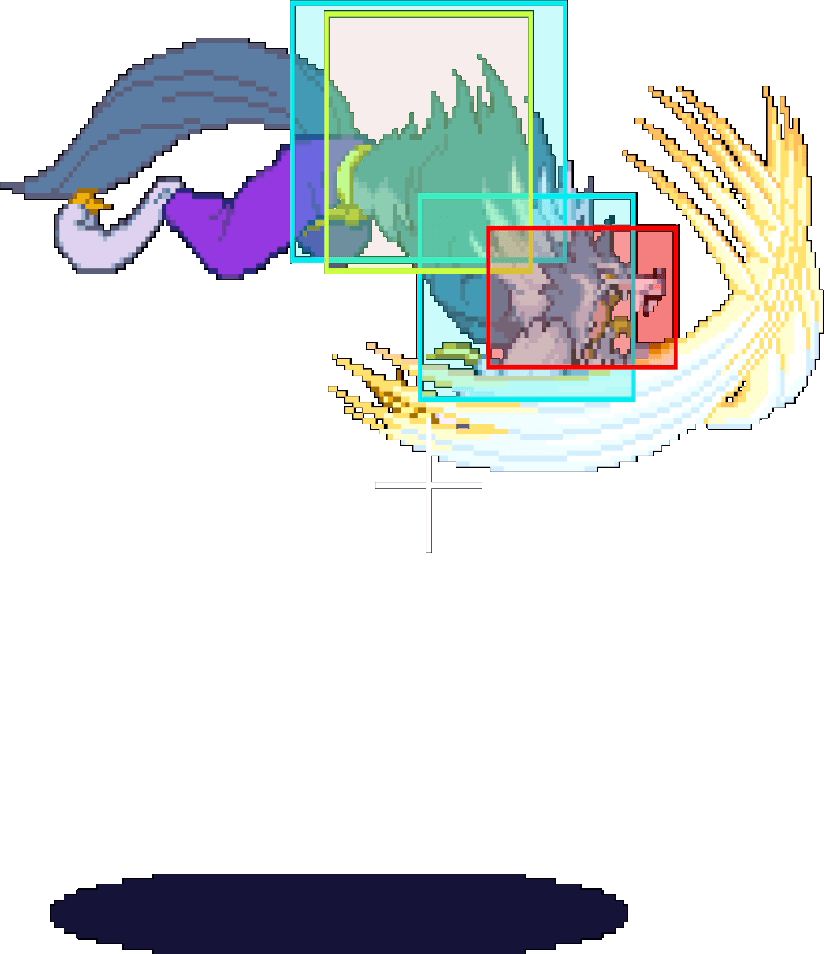
Air-to-air, round 2: In Vsav, after blocking a move in the air, you can immediately press your own jumping button while still in the air. So instead of aiming to flat out beat their jumping button with your own jumping button, you can deliberately jump up and block their attack air-to-air, and then press your own button right after that to punish them. There is counterplay—your opponent can still chain normals in the air, so if they’re ready for this, they can try to jail you to the ground with an air chain.
Air-to-air, round 3: Continuing that line of thought, because you can chain normals in the air exactly like you can on the ground (LP > LK > MP > MK > HP > HK), you can aim to meet your opponent in the air and jail them to the ground with an air chain before they get a chance to press whatever jump button they were planning to press.
Don’t be there: Sometimes it’s best to avoid the button altogether if you can. This can come in the form of a walk-under/dash-under. For whatever reason, I find it a lot easier to walk or dash forward under jumping normals in Vsav compared with other fighting games (and this is helped by cross-ups being much more rare here than they are in something like Street Fighter). This can be a great way to escape the corner!
Preemptive button: While challenging a jump-in as the attacker descends toward you may be difficult or impossible, you may be able to catch them on the way up. Attacks like Bulleta’s dash LP or Q-Bee’s 5MP are great at this. If you think someone is going to jump, but a button out there for them to jump into.
Pushblock: The only reason I’m putting this at the end of the list rather than at the beginning is because you probably won’t be consistently pushblocking when you’re first starting out. That being said, pushblock is the single most consistent anti-air option in Vsav. If you just stand there and pushblock a jump-in, you push your opponent back and gain some screen real estate.
The air game is incredibly important in Vsav, and it’ll probably take you a while to wrap your head around it. For any character, there will be times when grounded anti-airs work, so don’t just give up on them (they’re just a lot more situational than you might be used to). If you really want to play a grounded anti-air game, Felicia is the one character who can do that pretty reliably, so if you’re getting hung up here, you can always try picking cat.
4. Remember to Tech Roll
This is an easy one. After you get knocked down in Vsav, if you don’t press anything, you’ll get up in place. You can also press either left or right plus any button to roll either left or right. The timing isn’t strict at all (you can just mash buttons while holding left or right and consistently get the roll). Tech roll doesn’t have any punishable recovery and cannot be thrown.
When you’re first starting out, just randomly cycle between the three wakeup options (left/neutral/right). If you always choose the same option, your opponent can almost certainly run some oppressive oki on you, so by forcing them to try and guess or react to your roll, you’ll likely find yourself back to neutral more often than not after a knockdown.
5. Ireppa Is Your Friend
You’ll hear chicken block, upback, and ireppa, all used interchangeably to mean holding some version of up to escape offense/pressure with a jump. While you can’t air block grounded normals in Vsav, holding up is still extremely strong. Jumping away may allow you to escape a situation or even start your own offense. If you play a character with a fast jump like wolf or cat, if you neutral jump, you may land in time to punish a whiffed button, or at very least, start your own offense by forcing your opponent to block your descending jumping normal. If you play a character with an air dash, you can aim to dash immediately after your jump to act even more quickly and put your opponent on the back foot.
If you’re worried about a high/low mixup, ireppa can be a good option. If they go low, they need relatively precise timing to catch your rising hurtbox as you jump. Most of the high attacks you’ll be worried about in Vsav are jumping attacks, so you can air block them. This means by holding up back, you’ll be doing a quasi-OS to avoid the low option while blocking the high option. Depending on your opponent’s timing, their high option might miss too.
A large portion of the cast has some kind of high/low mix that’s structured like this (threatening either a jumping normal or a low grounded normal). Force them to prove they can stop you from jumping away before you resign yourself to holding that mix.
6. Pick Whoever You Want
You might’ve noticed that pretty much everything we’ve talked about up until this point has been character-agnostic. Vsav exists in a sort of strange Goldilocks zone—it somehow simultaneously has characters that are incredibly distinct from each other while also having your Vsav IQ being relatively transferable from one character to another. When I first started playing Vsav, I played Bulleta for a bit before realizing she wasn’t for me and switching to Q-Bee. My time with Bulleta was not wasted—the understanding I’d gained of the game as a whole meant I was able to pick up Q-Bee that much faster. Longtime players can basically play random select at a high level because having solid understanding of Vsav means you can get up to speed with any character in the game in (relatively) short order.
7. There Are Great Resources Out There—Use Them
The two best starting resources for learning Vsav are the wiki and the Discord server. If you’re starting from absolutely square one, I also really like AmeriKame’s Vampire Savior for Dummies: A Beginner’s Guide.
2026 Update: GuileWinQuote’s love letter to the game is great, and the short breakdowns of each character are the closest you’ll get to the Vsav equivalent of something like the Guilty Bits series.
Conclusion
I hope some of this was at least somewhat helpful. I honestly think Vsav is pretty easy to pick up in the grand scheme of things, and it’s a truly unique and amazing game. If there’s any interest, I could do a follow-up to this post, but in the meantime, get out there and play some Vsav!