

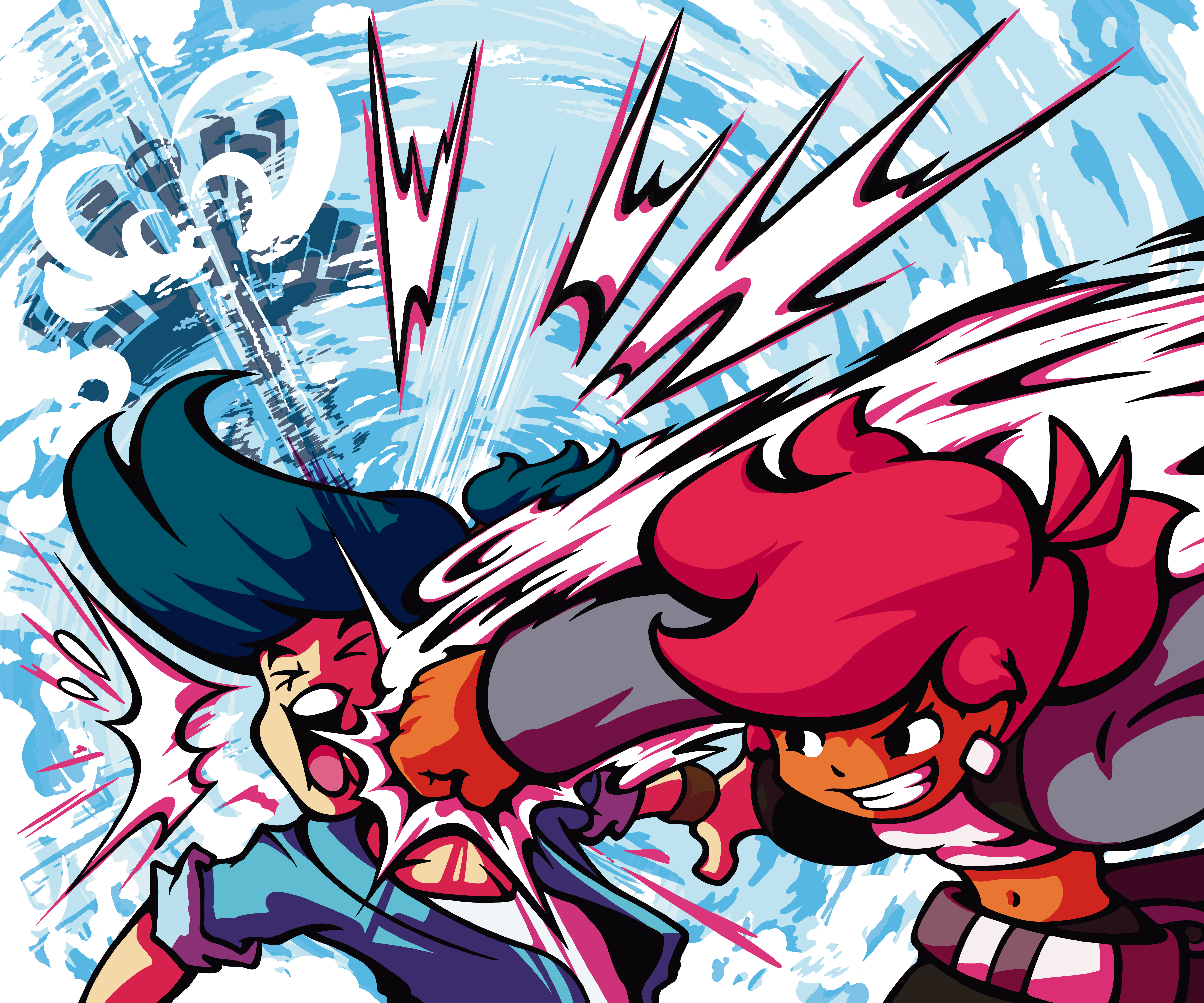
Marvel vs. Capcom 2 is the progenitor of a particular fighting game subgenre. I don’t know that there’s a single name that we’ve all agreed on, but I’m going to stick with calling these versus games (I don’t like terms like “tag games” since King of Fighters, Tekken Tag, etc. are their own separate thing). As a kid, I had Marvel vs. Capcom 2 for my Dreamcast, but I had no idea competitive fighting games were a thing, so I just had a great time playing arcade mode for hours on end. My introduction to playing versus games “correctly” was its sequel, Marvel vs. Capcom 3, back in 2011.
Ever since Marvel 2 established the core of this subgenre and became a phenomenon, more and more developers have been throwing their hat in the ring, trying to capture that versus game essence while putting their own twist on it. My view of the family tree is something like this:
Generation 1
Marvel vs. Capcom 2
Note: I know Marvel vs. Capcom 2 was built on the foundation laid in Marvel vs. Capcom, X-Men vs. Street Fighter, etc. I still consider Marvel 2 to be when things really crystalized here.
Generation 2
Marvel vs. Capcom 3 (2011)
Skullgirls (2012)
Generation 3
Marvel vs. Capcom Infinite (2017)
Dragon Ball FighterZ (2018)
BlazBlue: Cross Tag Battle (2018)
Power Rangers: Battle for the Grid (2019)
Generation 4
Hunter x Hunter: Nen x Impact (2025)
2XKO (2026)
Marvel Tōkon: Fighting Souls (2026)
Invincible VS (2026)
Scramble Heart City (TBD)
I think both Gen 2 games were really vying for the recognition of being the “real sequel” to Marvel 2 (whatever that means). While Skullgirls obviously didn’t have the Marvel license, they were clearly patterning many of its mechanics directly after Marvel 2. Ultimately, both games were successful in their own way, proving Marvel 2 was not just a one-off success, and this paved the way for the explosion of versus games we’ve seen in subsequent years.
As I mentioned earlier, Marvel 3 was my introduction to this type of game. I absolutely loved it, and I’ve been chasing the dragon ever since. I wrote a post not too long ago about how I still don’t believe there’s been a game that quite scratches that same itch.This isn’t a value judgement about how good or bad any of these other games are; I’m just saying that having assists or DHCs or whatever else will not necessarily mean your game actual feels anything like Marvel to play. This is fine! (though I selfishly want more Marvel 3 🙃)
We’re now in the midst of the Gen 4 releases, each with their own interpretation of the subgenre.
Enter Scramble Heart City
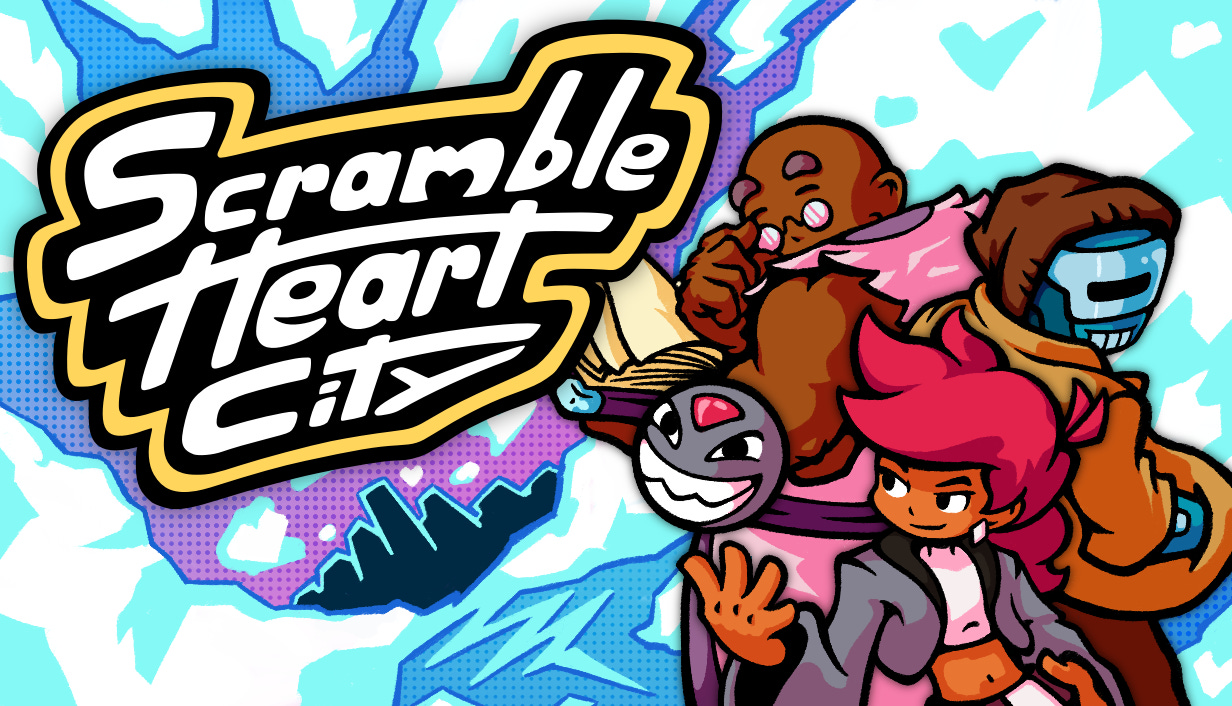
Scramble Heart City is a 3v3 versus game you can play in a web browser from the team behind Tough Love Arena. They’ve been doing open betas one weekend every month, and the December 2025 beta is the first one where I’ve had time to sit down with the game. Going into the game, my two questions were:
Where does this fit in that whole versus game genealogy I talked about earlier?
Comparisons to other versus games be damned—how much do I like this game on its own merits?
Ultimately, question two is the more important one. Scramble Heart City evokes Marvel mechanically in a bunch of different ways. You have a three character team with the player choosing one of three assists for each character. You have DHCs. You have pushblocks. You activate pushblock with the same button combination you use to dash. You can wavedash by repeatedly dashing and then cancelling the dash with a crouch. You can jump cancel your dash. Characters have varied movement options with different combinations and versions of double jumps, air dashes, and flight. There are install supers. It’s a six button game with light attack, medium attack, heavy attack, special, assist 1, and assist 2. There is a ton of Marvel DNA here. This game doesn’t venture into the active tag territory that MvC:I, BBTAG, and 2XKO have explored and sticks much closer to the Marvel 2 roots of the genre.
What I Like
Scramble Heart City uses one button for special moves rather than traditional motion inputs. More fighting games have moved in this direction in recent years, and I have mixed feelings about it. I made a video about how I mostly think one button specials are a good thing because they make a game play well across as many input devices as possible. That being said, I think they introduce certain problems even as they solve others. There’s the old adage of “Good, fast, cheap. Choose two.” The fighting game controls version of this is:
Expansive movesets
A reasonable number of buttons
Simple controls
You can really only have two of these. Traditionally, fighting games used motion inputs so that we could have both expansive movements and a reasonable number of buttons. With just four attack buttons, Dante in Marvel 3 has something like 50 unique moves. If you want to keep expansive movesets and also have simple controls, you need a million buttons. I personally dislike this approach. It’s one of the main reasons I bounced off 2XKO as hard as I did.
If you want simple controls and a reasonable number of buttons, you need to do more with less and make a game that’s fun and deep without characters needing dozens and dozens of moves. Scramble Heart City takes this approach, and I think it works really well here. The characters feel distinct and mechanically unique from one another.
Wavedashing, air dashing, and double jumping around also feel great. If a fighting game feels bad to move around it, I probably won’t stick around for long. Moving around in Scramble Heart City is a joy.
The game has some universal combo structures, so with most (all?) of the characters, you can get up and running with something like universal ground chain → air chain → air super. These aren’t optimal combos, but this lets you try out different teams pretty easily, and versus games are built on this kind of experimentation.
When the beta started up, I hopped into training mode thinking I’d spend maybe a half hour getting a feel for the game to see if it was anything I’d even be interested in. I think I accidentally spent something like four hours in training mode just noodling around, something I really haven’t done since Marvel 3. This game feels good to play, full stop.
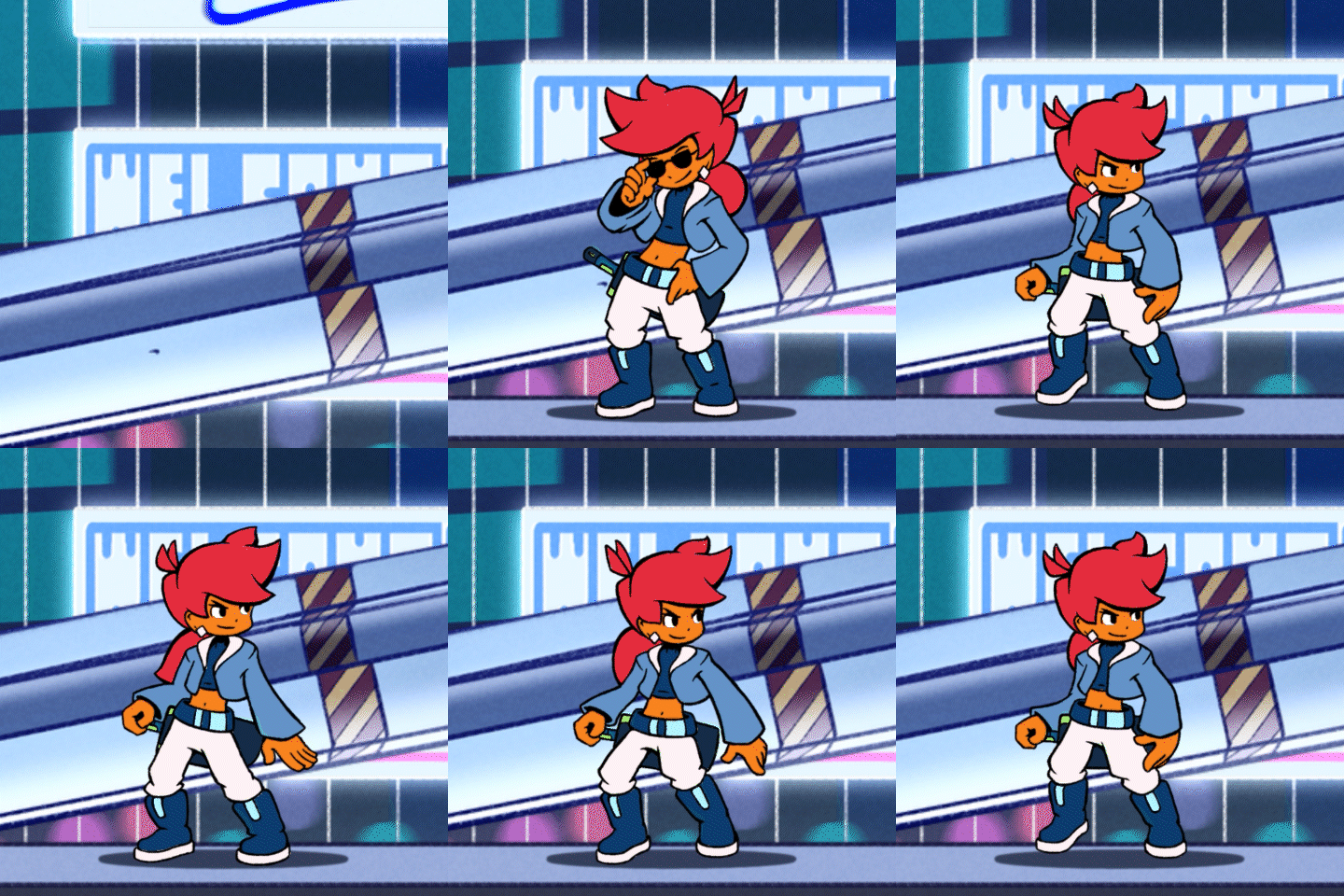
What I Don’t Like
Since the genesis of the subgenre, versus games have had some degenerate shit. To some extent, this is a feature and not a bug. If there’s enough competing degenerate mechanics and tactics, it can kind of all even out and just work somehow. The power levels of the characters in versus games are deliberately orders of magnitude beyond what you’d see in a Street Fighter game, and these absurd power levels are part of the appeal.
That being said, degen stuff can also sometimes break down, flattening the game down to a single dominant strategy (making things boring). As much as I love Marvel 3, I enjoyed it despite things like TAC infinites, Zero 300%ing a team, or dark Vergil melting an entire team in 10 seconds by himself.
While Scramble Heart City has pushblock (and a more powerful version of pushblock you can do by spending a meter) as a defensive mechanic, right now it feels like it can become a one player game once someone who knows what they’re doing lands a hit. Once knocked down (best I can tell) you have no control over your wakeup timing and you have no tech roll options, so if you survive a combo, you need to guess some coin flips to earn the right to play again. Obviously oki is not unique to versus games—my issue here is more with the risk/reward for the attacker and how many coin flips the defender needs to correctly guess in a row in order to play again. Right now it feels like there might be too little risk, too much reward, and too many coin flips.
After a character death, your incoming character is put into this same mix-up situation, so the game can easily become a single neutral interaction into looped oki into ggs.
The Rest
I have some other random thoughts, so here they are in no particular order:
Character Count Could be a Problem
There are currently five playable characters, and there are three additional slots blocked off on the character select screen. I don’t need or expect 40+ characters, but eight characters feels very sparse. I hope they’re eventually able to get to double digits at least.
Does Team Comp Matter?
One of the coolest things about versus games (when done well) is how the unit of play is your team, rather than any one individual character. Quoting from an older post I wrote on this same topic, “I think the synergies that make your characters cohere together as a team are what makes versus games truly special. If you can pick any random three characters and it works alright, it probably means synergies just don’t matter all that much.”
Using a game I know well as an example, Marvel 3 has a bunch of team comp elements that matter a ton. Having a first character with a strong DHC out (reversals like Spencer’s bionic arm super are great for this) and then a second character with a strong DHC in (safe supers like Storm’s hail storm or installs like Dante’s devil trigger are good here) can form the backbone of a team. Team supers like the Doom/Amaterasu follow-up my lead can be cool team-specific meter dumps. Assists are arguably the most important here—playing Magneto with Doom missiles assist feels meaningfully different from playing Magneto with Sentinel drones assist feels meaningfully different from playing Magneto with Rocket Raccoon log trap assist.
I’ve spent so little time with Scramble Heart City that the jury is still out on how well they’ll pull this off, but I’m hopeful that they will.
The Slippery Slope Problem
Historically, fighting games don’t have issues with slippery slopes—they’re not over until they’re over. Like in Street Fighter, a Ryu at 50% health has all of his moves and combos and is just as dangerous as Ryu at full health. This is not true in versus games—as you lose characters, you lose tools. Ever since Marvel 2 had players quitting back to character select when they were down to solo Captain Commando, versus games have been trying different solutions to this problem, with varying degrees of success. Marvel 3 had x-factor. DBFZ has sparking blast/limit break. Currently, Scramble Heart City is sticking closely to the Marvel 2 mold of “if you’re down to your last character, tough shit.” Solo characters can DHC into themselves (so you at least get solid damage output if you find a hit with your last character), but I don’t think that’ll do much to mitigate the slippery slope. For better or for worse, when you’re down too your last character against your opponent’s full team in Scramble Heart City, there’s a good chance you’re cooked.
Infinite Prevention System
Some versus games use a system called hit stun deterioration (HSD) to limit combo length and (hopefully) prevent infinite combos. HSD means that lots of stuff combos together pretty easily early on in the combo, and then as the combo goes on, moves do less and less hit stun, and eventually even your hardest hitting moves don’t have enough hit stun for another attack to connect, so the combo must eventually end.
I like HSD. HSD (along with damage scaling) tends to result in combos having diminishing returns. A really basic combo might do like 60% of the damage of an optimal combo. With a bit of practice, you can do a combo that’s not too much more difficult that gets you 70% damage. Players with great execution are still rewarded, but they’re not doing double or triple the damage of someone using fairly basic combos. It’s also pretty intuitive (to me, anyway). As the combo goes on, you start omitting light attacks once they stop working. Then you omit medium attacks. Then you find a way to get a knockdown or combo into a super before HSD puts a hard stop on things. It’s simple and makes sense.
Scramble Heart City limits combo length via an infinite prevention system (IPS). Pioneered by Skullgirls, IPS was a system meant to prevent infinites by detecting when you do the same move sequence in a combo more than once. Scramble Heart City’s version of this has a UI element that appears once a combo gets going that fills as you continue the combo. It fills faster depending on the type of moves you do and how many times they’ve already been used in the combo. If the the bar fills all the way up, the character pops out of the combo and gets a bar of super meter (as the attacker, you really want to end the combo right before IPS ends it for you). I don’t love IPS as a concept. When I’m trying to lab out a new combo, it just feels like I’m grasping at a math equation I can’t see, trying to read the designer’s mind and guess their intent.
Conclusion
I honestly don’t know where I’ll land on this game. It’s so early in development that it could become a pretty different game six months or a year from now, and many of my criticisms might be rendered moot. At very least, I’m having fun with it, and I’m excited to see where it ends up.